Designing creator growth tools for Nigeria’s 37.4M TikTok and 27M YouTube audience.

I shaped Vynture’s early product for tracking performance across channels, planning content, and using AI support to improve growth decisions.
div
div

Context & Opportunity

Nigerian creators already had attention across TikTok, YouTube, Instagram, X, and other platforms, but the work behind that growth was still scattered.

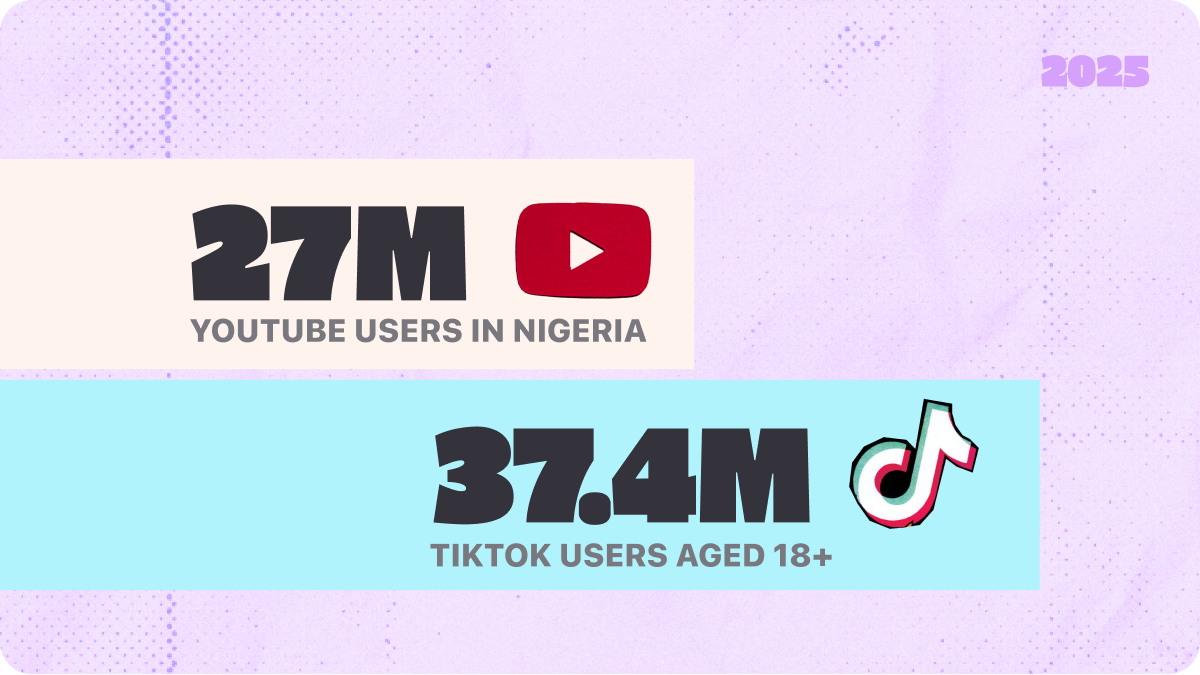
Around the time I worked on VyntureOS, DataReportal’s Digital 2025 Nigeria report showed 27M YouTube users in Nigeria and 37.4M TikTok users aged 18+ in early 2025. TikTok’s potential ad reach also increased by 13.5M between early 2024 and early 2025. (These were not Vynture traction numbers. I used them as market context to understand the size of the audience Nigerian creators were building around.)

They had content on one platform, audience data on another, ideas in notes, collaborations in chats, and posting schedules in separate tools. This made it harder to understand what was working, plan consistently, and make better growth decisions.
Report data

The gap was not attention. The gap was structure.

Creators had content on one platform, audience data somewhere else, ideas in their notes, collaborations in chats, and posting plans in different tools. That made it harder to know what was working, plan consistently, and make better growth decisions.

VyntureOS was designed around that gap.

The goal was to build a single workspace for creators to track their activity, plan content, assess performance, and receive improvement support.

div

What I Was Solving

socials

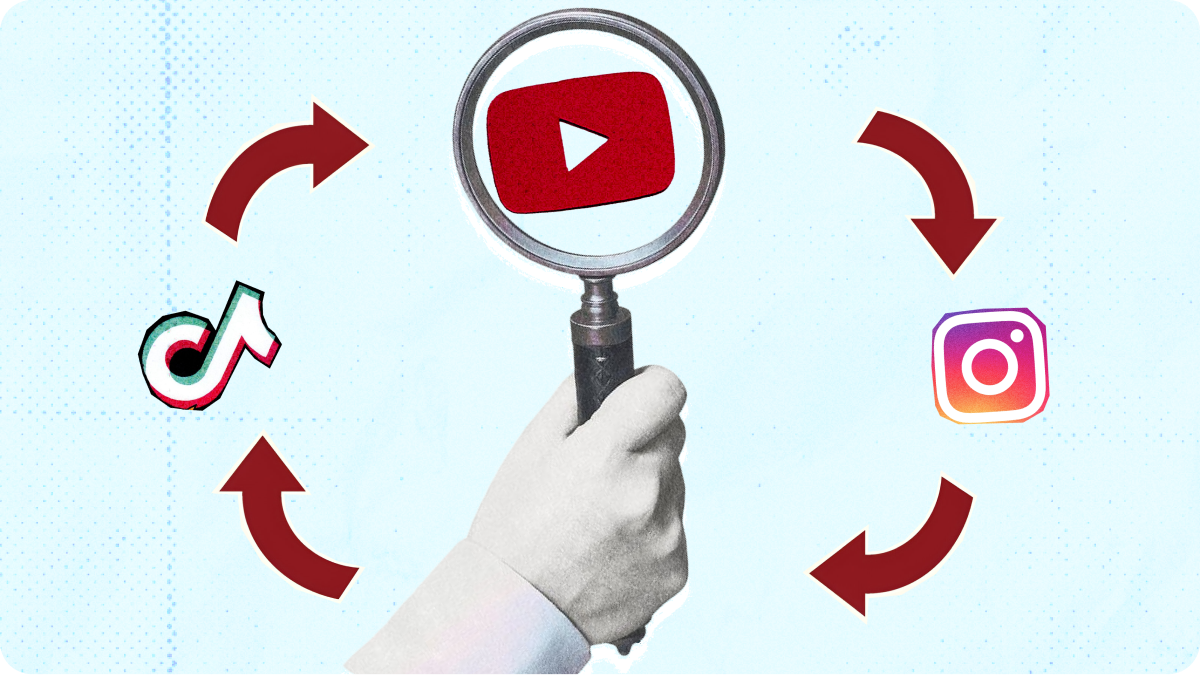
A creator could have a strong TikTok page, a growing YouTube channel, an active Instagram account, and content ideas sitting in different places. But without a connected view, it becomes harder to answer simple questions:

  • What platform is growing fastest?
  • What content is performing best?
  • What should I post next?
  • What should I repeat, improve, or stop doing?
  • How do I stay consistent across channels?
  • How do I turn attention into growth?

VyntureOS was built around a simple problem:

Creators needed one clearer place to understand their growth and plan what to do next.

div

What We Focused On First

VyntureOS could have become many things at once: an analytics tool, a content planner, an AI assistant, an internal dashboard, or a creator management system.

For the first version, I focused on what creators needed most: a simple way to see what was happening across their channels and plan what to do next.

So the first experience focused on:

  • connecting creator accounts
  • showing performance across channels
  • helping creators see what content was working
  • giving them a content calendar to plan ahead
  • using AI to suggest ideas and improve their plans
  • giving the team a clearer way to support creator growth
div

What I Designed

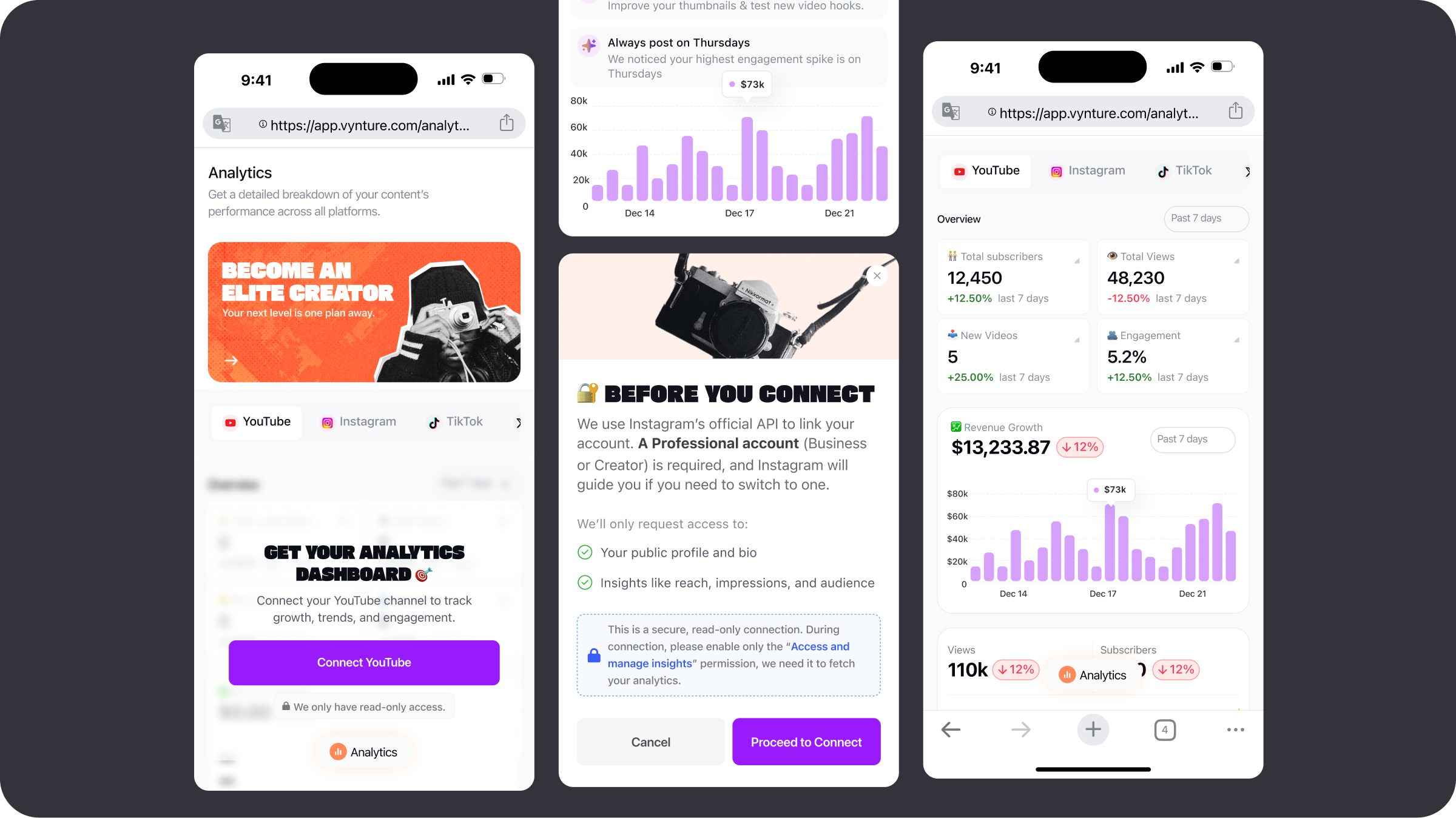
1. Connected Accounts

I designed the connected accounts experience to make each platform easy to scan and see what was growing and needed attention.
analytics

2. Analytics Overview

Instead of overwhelming creators with too many charts, I worked around the things they would likely care about first:

  • audience growth
  • engagement trends
  • top-performing content
  • platform comparison
  • recent activity
  • content performance by channel
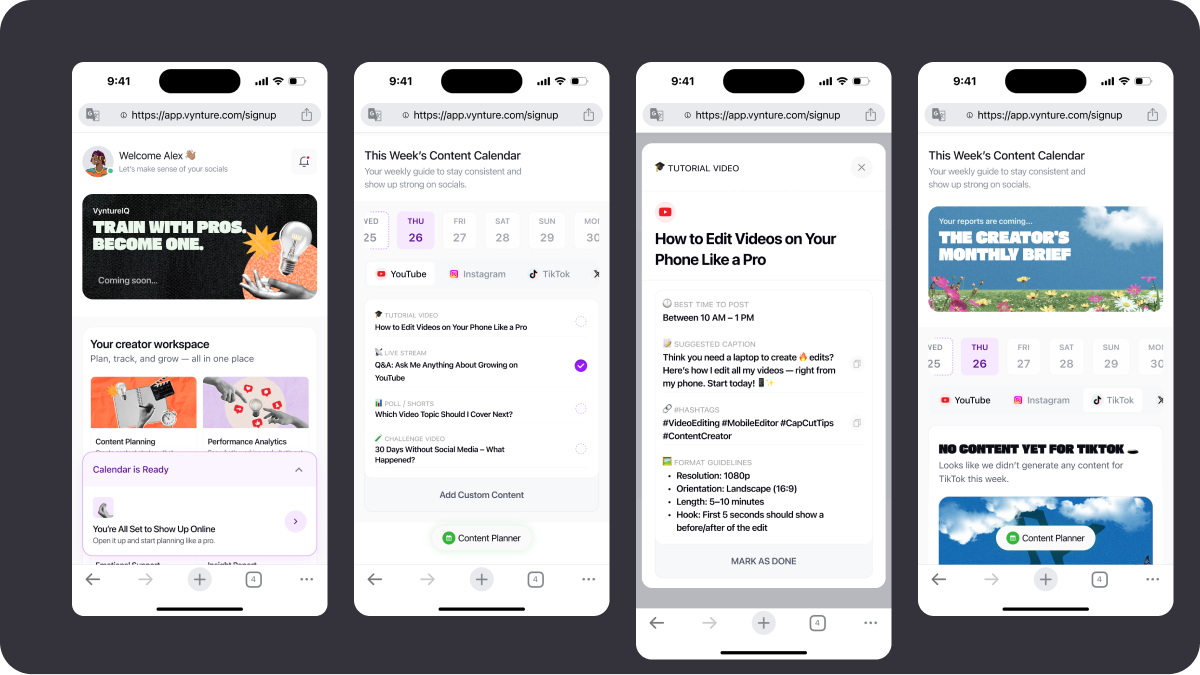
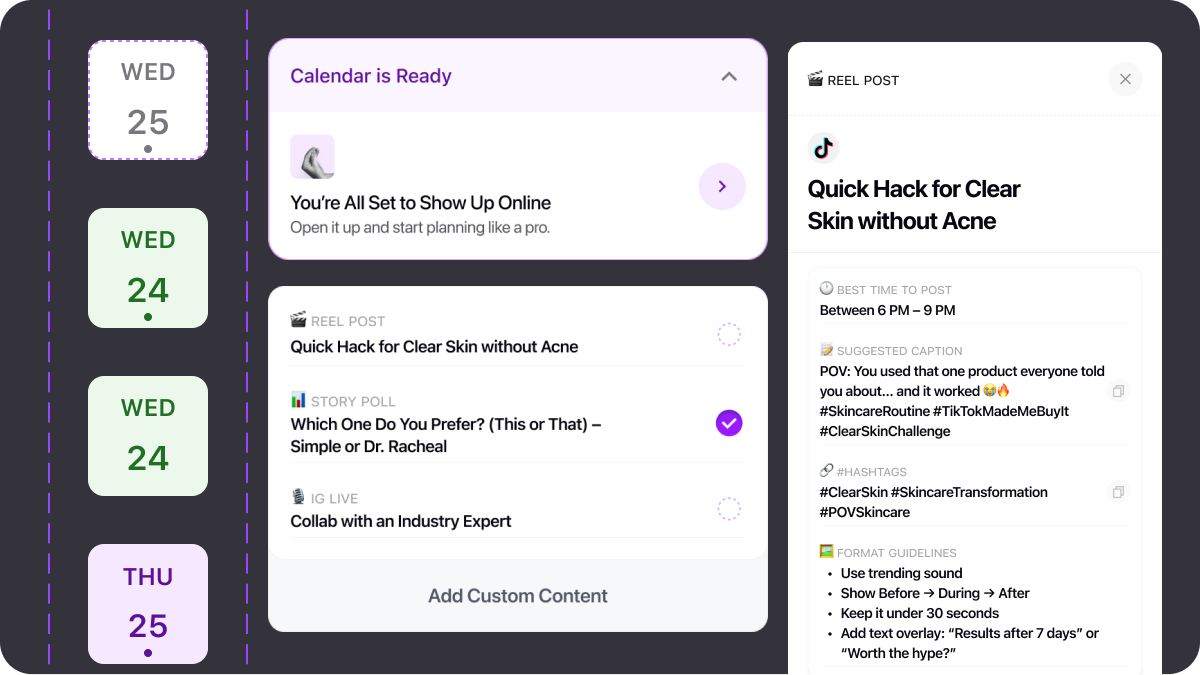
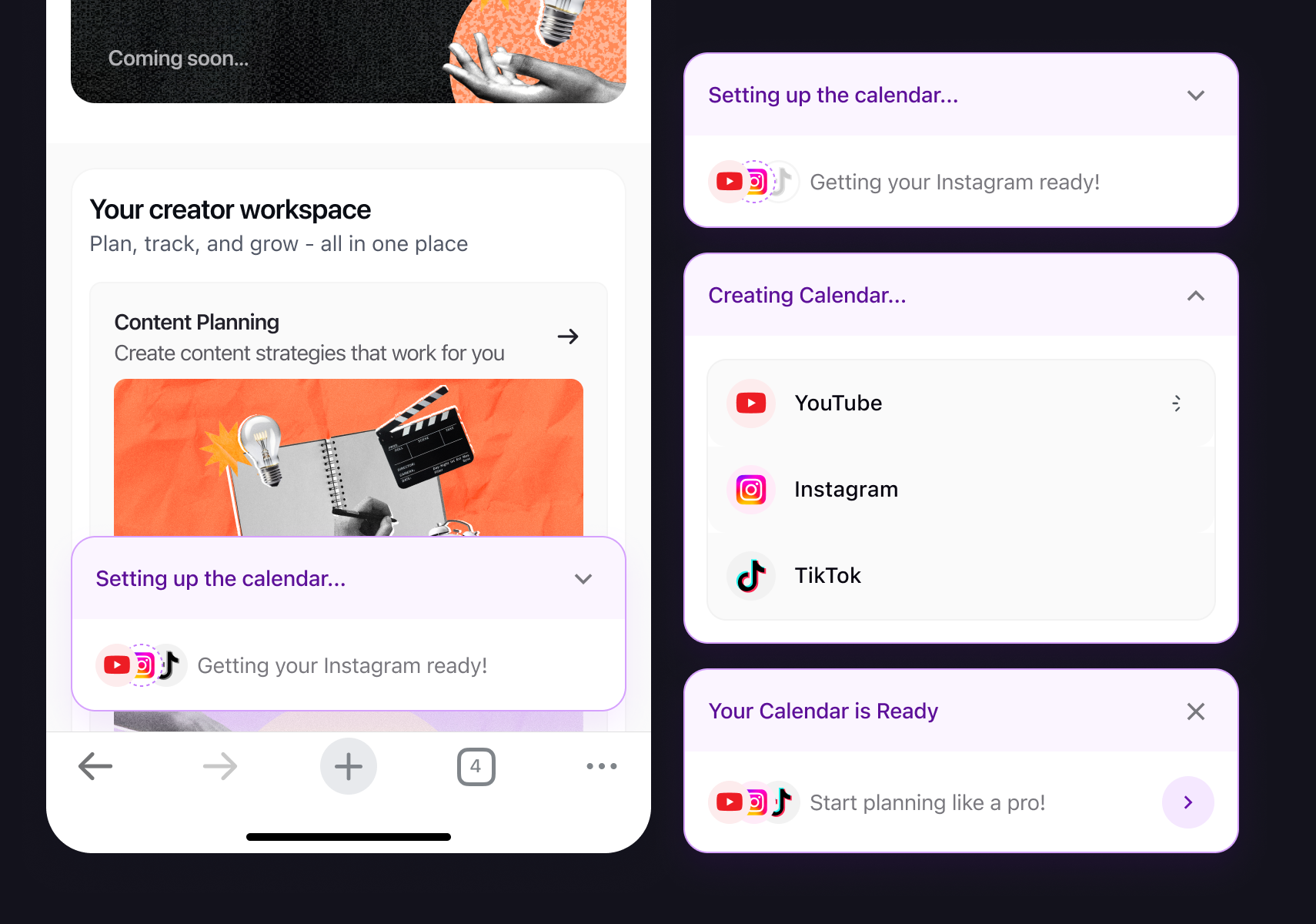
  1. Content Calendar

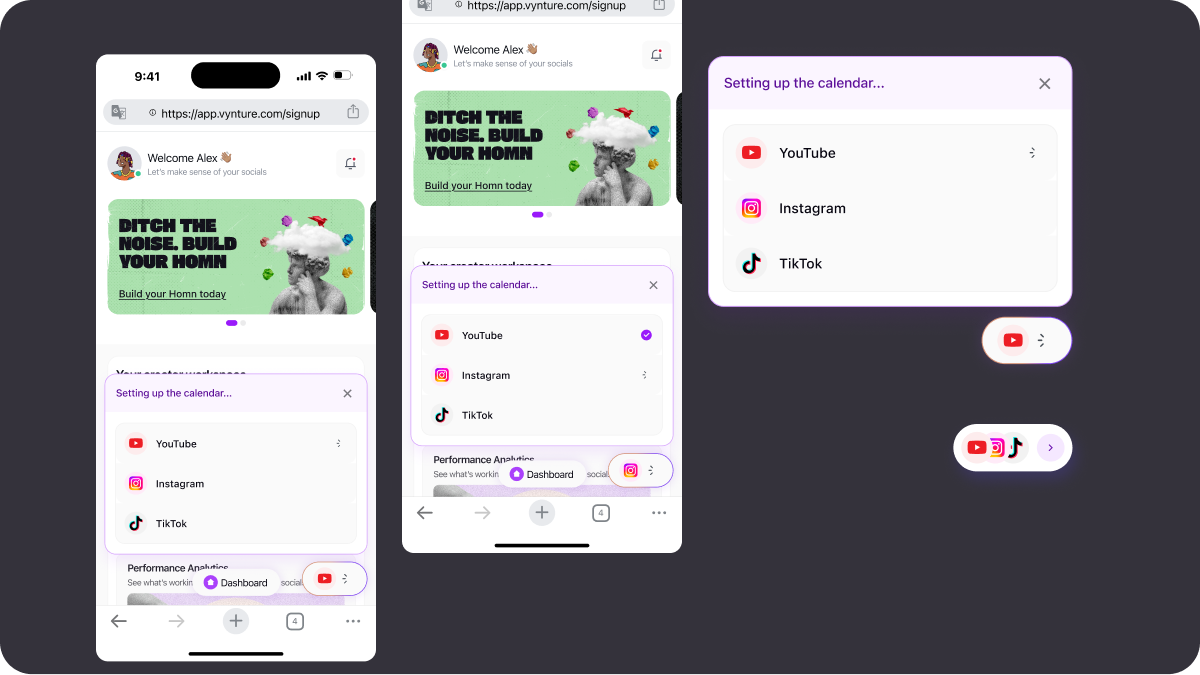
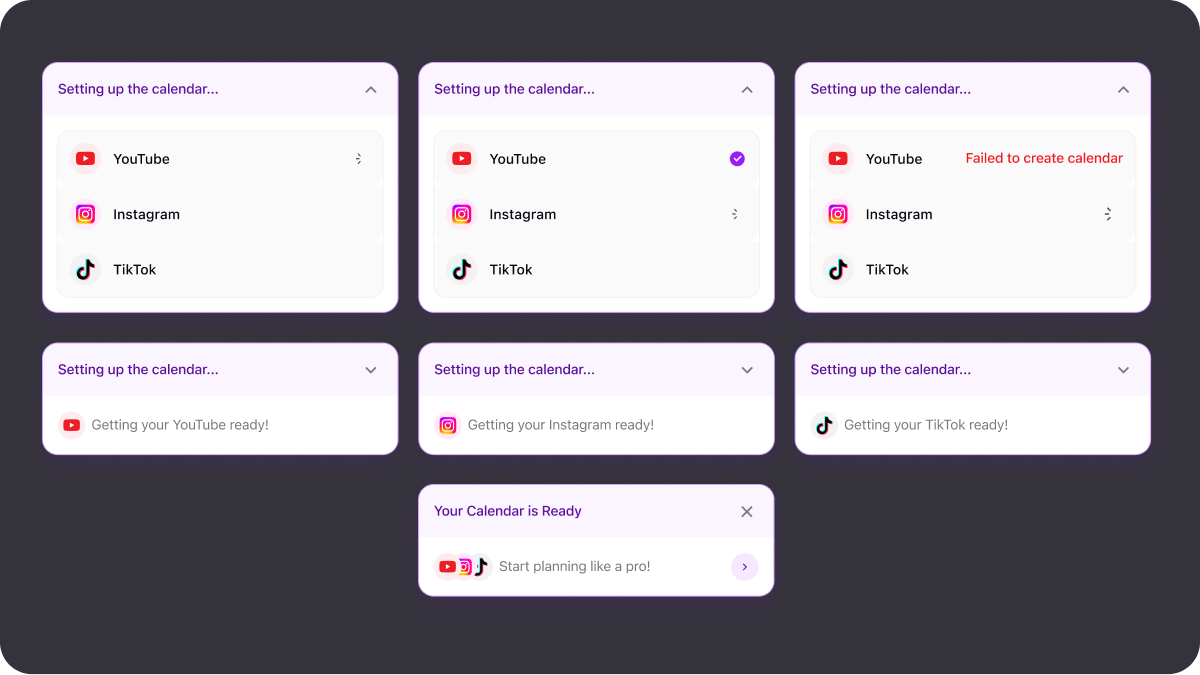
The content calendar helped creators organise what they wanted to post and when.

It supported:

  • content ideas
  • planned posts
  • drafts
  • scheduled content
  • platform tags
  • content themes
  • AI-generated suggestions
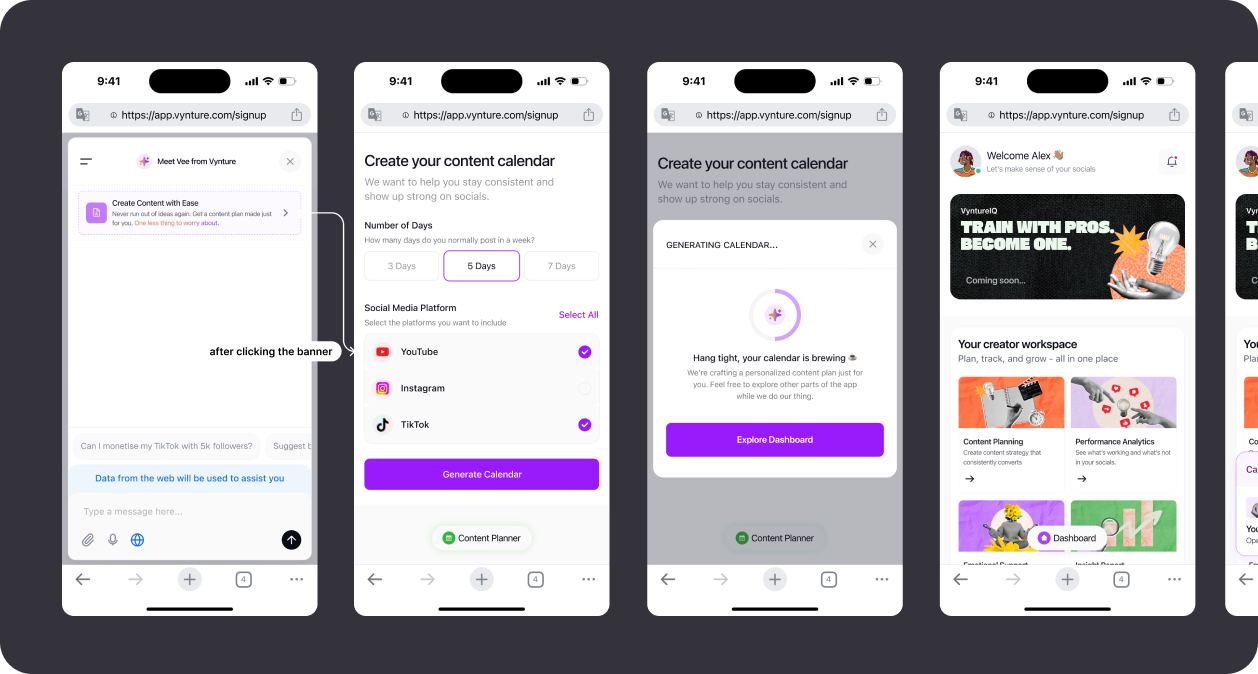
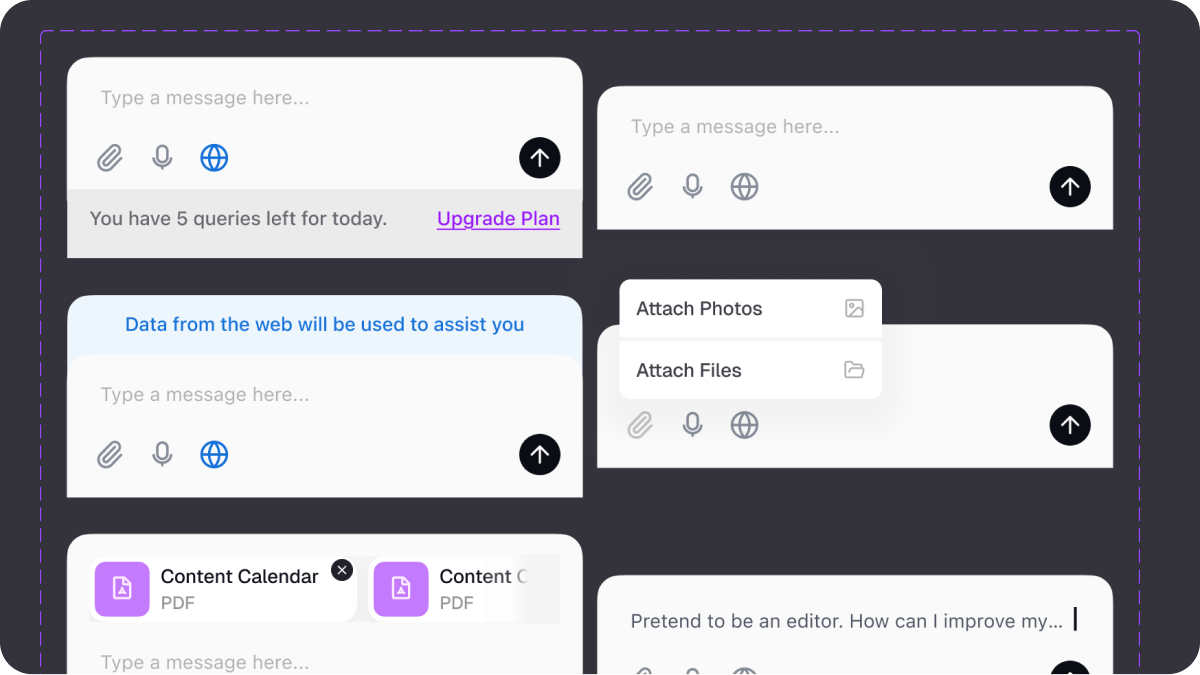
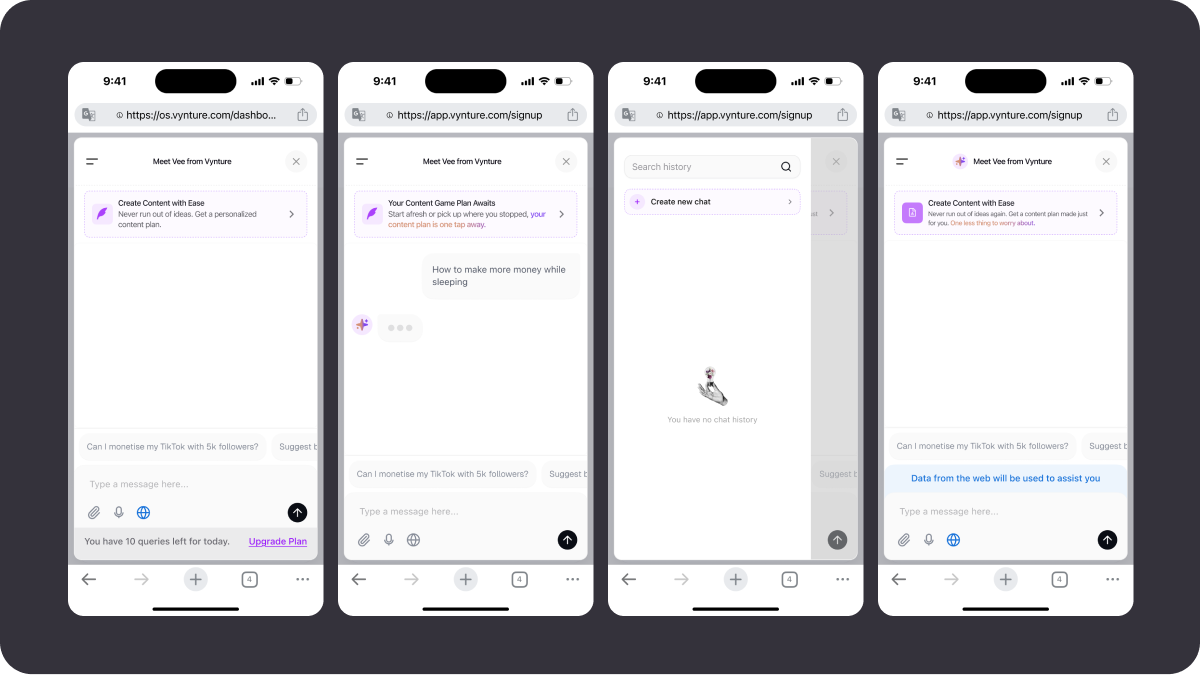
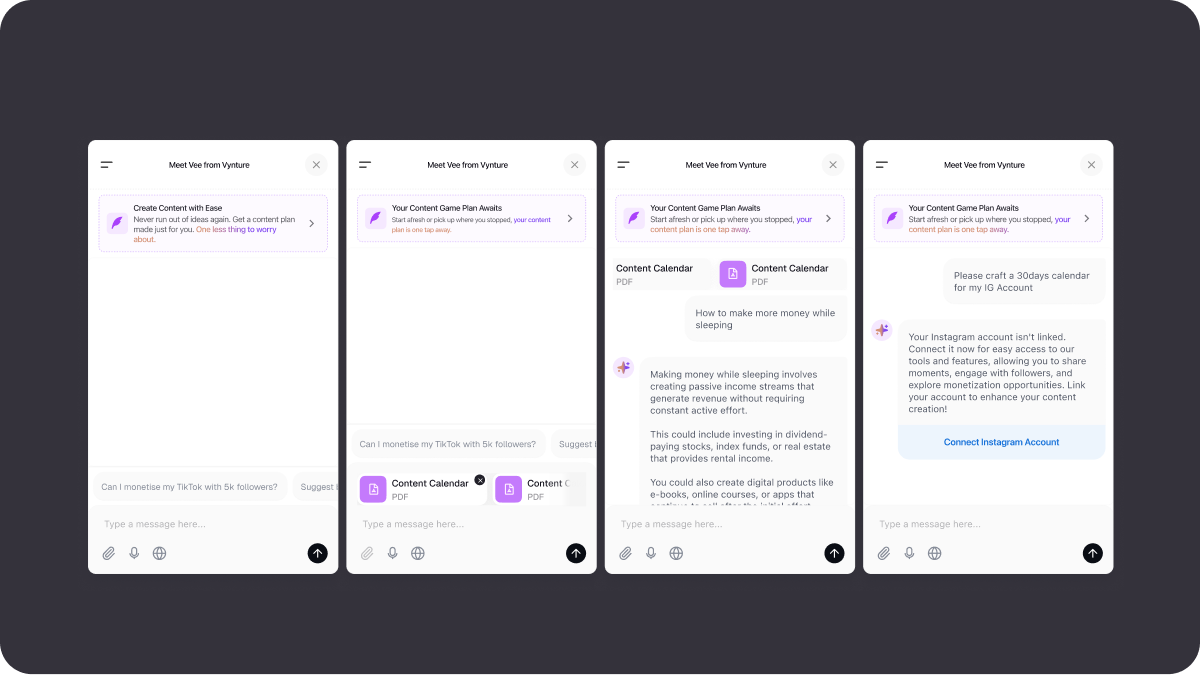
  1. AI-Assisted Planning

AI was designed to support the creator’s actual workflow. It could help creators:

  • generate content ideas
  • build a weekly content plan
  • improve captions
  • turn one content idea into multiple formats
  • suggest what to post based on performance
  • improve positioning or page copy
calendar
div

What I Learned

VyntureOS reminded me that useful products do not always need to do more. Sometimes they need to help people make sense of what they are already doing.

Creators already had platforms, content, and audience activity. What they needed was a clearer way to connect those pieces.

The most important part of my work was helping turn a broad idea into a product that felt easier to understand, easier to use, and easier to grow from.
div

Designing creator growth tools for Nigeria’s 37.4M TikTok and 27M YouTube audience.

I shaped Vynture’s early product for tracking performance across channels, planning content, and using AI support to improve growth decisions.

div
div

Context & Opportunity

Nigerian creators already had attention across TikTok, YouTube, Instagram, X, and other platforms, but the work behind that growth was still scattered.

Around the time I worked on VyntureOS, DataReportal’s Digital 2025 Nigeria report showed 27M YouTube users in Nigeria and 37.4M TikTok users aged 18+ in early 2025. TikTok’s potential ad reach also increased by 13.5M between early 2024 and early 2025. (These were not Vynture traction numbers. I used them as market context to understand the size of the audience Nigerian creators were building around.)

They had content on one platform, audience data on another, ideas in notes, collaborations in chats, and posting schedules in separate tools. This made it harder to understand what was working, plan consistently, and make better growth decisions.

Report data

The gap was not attention. The gap was structure.

Creators had content on one platform, audience data somewhere else, ideas in their notes, collaborations in chats, and posting plans in different tools. That made it harder to know what was working, plan consistently, and make better growth decisions.

VyntureOS was designed around that gap.

The goal was to build a single workspace for creators to track their activity, plan content, assess performance, and receive improvement support.

div

What I Was Solving

socials

A creator could have a strong TikTok page, a growing YouTube channel, an active Instagram account, and content ideas sitting in different places. But without a connected view, it becomes harder to answer simple questions:

  • What platform is growing fastest?
  • What content is performing best?
  • What should I post next?
  • What should I repeat, improve, or stop doing?
  • How do I stay consistent across channels?
  • How do I turn attention into growth?

VyntureOS was built around a simple problem:

Creators needed one clearer place to understand their growth and plan what to do next.

div

What We Focused On First

VyntureOS could have become many things at once: an analytics tool, a content planner, an AI assistant, an internal dashboard, or a creator management system.

For the first version, I focused on what creators needed most: a simple way to see what was happening across their channels and plan what to do next.

So the first experience focused on:

  • connecting creator accounts
  • showing performance across channels
  • helping creators see what content was working
  • giving them a content calendar to plan ahead
  • using AI to suggest ideas and improve their plans
  • giving the team a clearer way to support creator growth
div

What I Designed

1. Connected Accounts

I designed the connected accounts experience to make each platform easy to scan and see what was growing and needed attention.

analytics

2. Analytics Overview

Instead of overwhelming creators with too many charts, I worked around the things they would likely care about first:

  • audience growth
  • engagement trends
  • top-performing content
  • platform comparison
  • recent activity
  • content performance by channel
content component
content component
  1. Content Calendar

The content calendar helped creators organise what they wanted to post and when.

It supported:

  • content ideas
  • planned posts
  • drafts
  • scheduled content
  • platform tags
  • content themes
  • AI-generated suggestions
calendar
  1. AI-Assisted Planning

AI was designed to support the creator’s actual workflow. It could help creators:

  • generate content ideas
  • build a weekly content plan
  • improve captions
  • turn one content idea into multiple formats
  • suggest what to post based on performance
  • improve positioning or page copy
calendar
div

What I Learned

VyntureOS reminded me that useful products do not always need to do more. Sometimes they need to help people make sense of what they are already doing.

Creators already had platforms, content, and audience activity. What they needed was a clearer way to connect those pieces.

The most important part of my work was helping turn a broad idea into a product that felt easier to understand, easier to use, and easier to grow from.

div

Designing creator growth tools for Nigeria’s 37.4M TikTok and 27M YouTube audience.

I shaped Vynture’s early product for tracking performance across channels, planning content, and using AI support to improve growth decisions.

div
div

Context & Opportunity

Nigerian creators already had attention across TikTok, YouTube, Instagram, X, and other platforms, but the work behind that growth was still scattered.

Around the time I worked on VyntureOS, DataReportal’s Digital 2025 Nigeria report showed 27M YouTube users in Nigeria and 37.4M TikTok users aged 18+ in early 2025. TikTok’s potential ad reach also increased by 13.5M between early 2024 and early 2025. (These were not Vynture traction numbers. I used them as market context to understand the size of the audience Nigerian creators were building around.)

They had content on one platform, audience data on another, ideas in notes, collaborations in chats, and posting schedules in separate tools. This made it harder to understand what was working, plan consistently, and make better growth decisions.

Report data

The gap was not attention. The gap was structure.

Creators had content on one platform, audience data somewhere else, ideas in their notes, collaborations in chats, and posting plans in different tools. That made it harder to know what was working, plan consistently, and make better growth decisions.

VyntureOS was designed around that gap.

The goal was to build a single workspace for creators to track their activity, plan content, assess performance, and receive improvement support.

div

What I Was Solving

socials

A creator could have a strong TikTok page, a growing YouTube channel, an active Instagram account, and content ideas sitting in different places. But without a connected view, it becomes harder to answer simple questions:

  • What platform is growing fastest?
  • What content is performing best?
  • What should I post next?
  • What should I repeat, improve, or stop doing?
  • How do I stay consistent across channels?
  • How do I turn attention into growth?

VyntureOS was built around a simple problem:

Creators needed one clearer place to understand their growth and plan what to do next.

div

What We Focused On First

VyntureOS could have become many things at once: an analytics tool, a content planner, an AI assistant, an internal dashboard, or a creator management system.

For the first version, I focused on what creators needed most: a simple way to see what was happening across their channels and plan what to do next.

So the first experience focused on:

  • connecting creator accounts
  • showing performance across channels
  • helping creators see what content was working
  • giving them a content calendar to plan ahead
  • using AI to suggest ideas and improve their plans
  • giving the team a clearer way to support creator growth
div

What I Designed

1. Connected Accounts

I designed the connected accounts experience to make each platform easy to scan and see what was growing and needed attention.

analytics

2. Analytics Overview

Instead of overwhelming creators with too many charts, I worked around the things they would likely care about first:

  • audience growth
  • engagement trends
  • top-performing content
  • platform comparison
  • recent activity
  • content performance by channel
calendar
calendar2
  1. Content Calendar

The content calendar helped creators organise what they wanted to post and when.

It supported:

  • content ideas
  • planned posts
  • drafts
  • scheduled content
  • platform tags
  • content themes
  • AI-generated suggestions
build_content
calendar_guide
custom
  1. AI-Assisted Planning

AI was designed to support the creator’s actual workflow. It could help creators:

  • generate content ideas
  • build a weekly content plan
  • improve captions
  • turn one content idea into multiple formats
  • suggest what to post based on performance
  • improve positioning or page copy
ai chat
calendar
modal calendar
div

What I Learned

VyntureOS reminded me that useful products do not always need to do more. Sometimes they need to help people make sense of what they are already doing.

Creators already had platforms, content, and audience activity. What they needed was a clearer way to connect those pieces.

The most important part of my work was helping turn a broad idea into a product that felt easier to understand, easier to use, and easier to grow from.

card mockup
div